
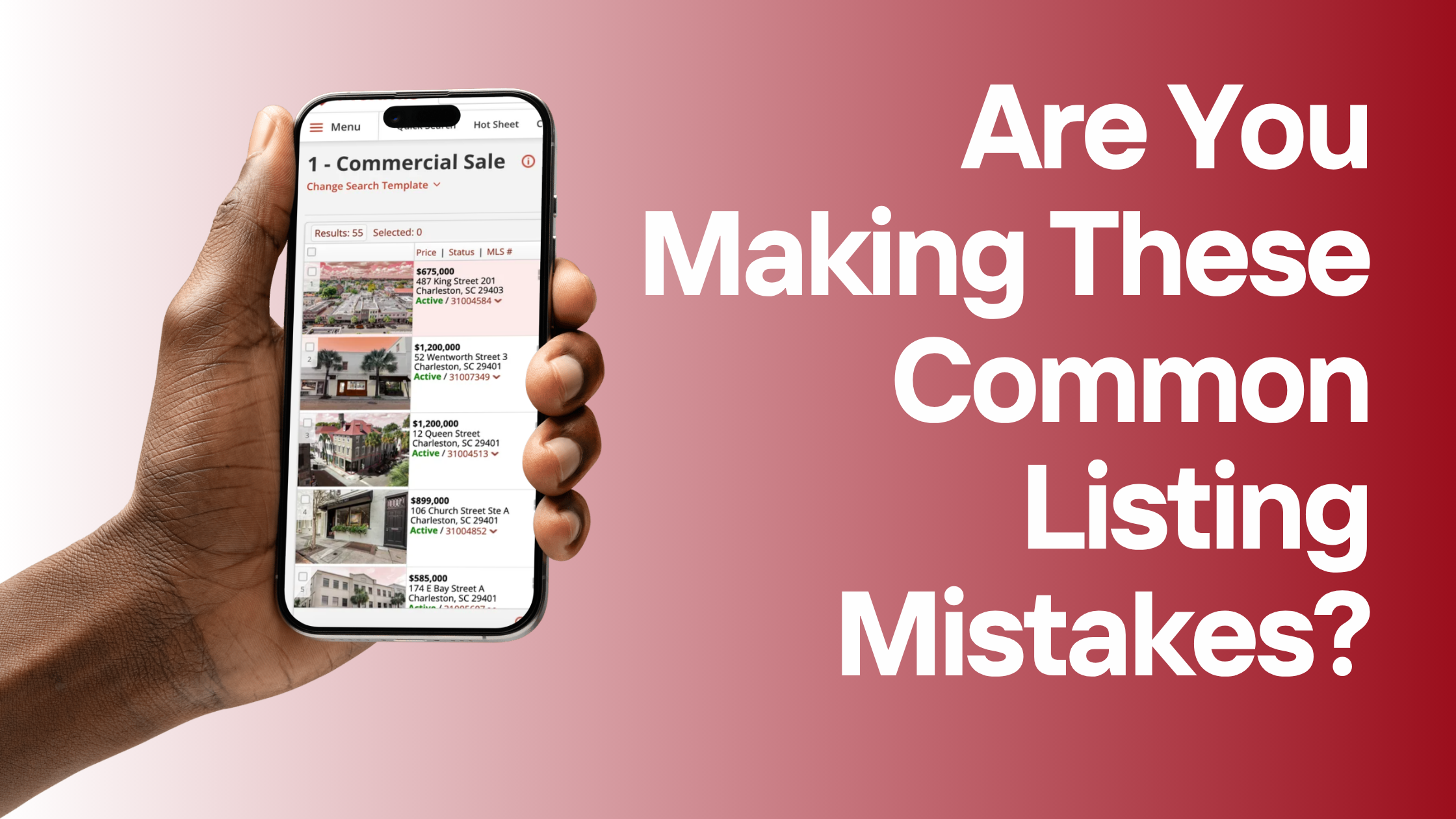
A commercial MLS is a multiple listing service built specifically for commercial real estate, with broker-verified data, current property details, syndication control, and tools that make listings and deals easier to manage. In a market that moves fast, a listing that’s even slightly off can cost you time, credibility, and ultimately the deal. Whether you’re a seasoned commercial broker or newer to the South Carolina market, it’s worth taking a fresh look at how your listings are entered, maintained, and presented, and what platform they live on in the first place.
Many of the mistakes below aren’t really about carelessness. They’re what happens when brokers are working around tools that weren’t built for commercial real estate: resi-mercial categories that don’t cover commercial listing needs, spreadsheets, or scattered PDFs. Below, we’ll look at the most common listing mistakes, how a dedicated commercial MLS helps you avoid them with accurate broker-loaded data, co-broker cooperation, ownership and property insights, and better control over where listings appear, and why joining a commercial MLS community like SCCMLS helps your listings reach qualified buyers and brokers more efficiently.
1. Incomplete or Inconsistent Commercial Property Data
The biggest culprit behind lost leads and wasted showings is missing information. Square footage, zoning, parking ratios, ceiling height, and loading dock access are details that matter far more in commercial deals than in residential real estate, because they often determine whether a property is even viable for an investment.
How to avoid it: Treat every field in the listing as a filter that either qualifies or disqualifies the right buyer. If a field is blank, a serious commercial property investor may assume the worst and move on rather than call to ask. SCCMLS members can pull verified ownership and property details straight from CRS Tax Suite, which combines public records with MLS listing data, so you’re not left guessing at square footage or ownership history before you publish.
2. Underestimating the Value of Broker-Loaded Data for Market Analysis
Some agents rely on scraped or third-party aggregated data rather than entering accurate, broker-verified details directly. This can lead to outdated pricing, incorrect availability status, or property specs that don’t match reality by the time a buyer inquires.
How to avoid it: Keep your listings updated directly in the MLS as soon as anything changes: price, status, availability date, or terms. Broker-loaded data is more trustworthy precisely because it comes from the source. It reflects well on your professionalism when buyers and co-op agents can rely on it. This allows investors to make informed decisions and build trust with your personal brand.
3. Poor or Outdated Commercial Real Estate Photography
Commercial buyers and tenants are often evaluating a property for a specific use, such as retail frontage, warehouse clear height, or office layout, and photos that are dark, outdated, or missing key angles make it hard for them to picture their business there.
How to avoid it: Include exterior shots from multiple angles, interior shots of any unique features (loading docks, mezzanines, drive-in doors), and if possible, a site plan or floor plan. Update photos whenever the property’s condition changes.
See it in action: If you’re still relying on residential tools or informal networks to move commercial deals, it’s worth seeing what a purpose-built commercial MLS looks like day to day. Book a free SCCMLS demo and we’ll walk you through exactly how broker-loaded data, listing accuracy, and co-op tools work together. No pressure, just a look under the hood.
4. Vague or Missing Zoning and Permitted Use Information for Industrial Properties
Knowledge is power, zoning is often the first thing a commercial buyer or their attorney checks. If it’s not listed clearly, they may assume the worst or simply skip the listing rather than dig for the answer.
How to avoid it: List the current zoning designation and, where possible, a plain-language summary of permitted uses. This is another spot where CRS Tax Suite pays off: since it pulls current public record data alongside MLS listings, you can confirm zoning and ownership details in-platform instead of tracking down the local planning department every time.
5. Failing to Update Listing Status Promptly
A listing marked “active” after it’s gone under contract creates confusion, wastes other brokers’ time, and can damage trust in the MLS as a reliable source of truth.
How to avoid it: Make status updates part of your transaction checklist, not an afterthought. The moment terms are agreed upon, update the MLS.
6. Limiting Where Your Listing Actually Gets Seen
A great listing does no good if it only lives in one place. Brokers often either post everywhere with no control over where their data ends up, or they stick to a single platform and miss out on additional buyer traffic entirely.
How to avoid it: SCCMLS gives you both sides of this. Syndication control lets you choose exactly where your listings appear across third-party platforms, so you manage your exposure instead of losing track of it. Through our Crexi partnership, your listings can reach a wider pool of active commercial buyers and tenants. This leading commercial real estate marketplace, gives you added visibility without extra manual work.
7. The Commercial Real Estate Market is a Network – Use It
Commercial real estate is a relationship business, and brokers who try to handle every part of a deal solo, from marketing photography to market data to buyer connections, tend to move slower than those who lean on a network.
Membership in a commercial MLS community is about more than data. It connects you to other brokers, lenders, appraisers, and vendors, including real estate photographers and other specialists, who can help you get a listing market-ready faster. The more active you are in that network, the more opportunities tend to come your way.
Why It All Comes Back to a Reliable Commercial MLS
Every one of these mistakes is easier to avoid, and most of them stop happening altogether, when brokers have access to a dedicated commercial MLS built specifically for how commercial deals actually work. Accurate, broker-verified data is only part of it. With tools like CRS Tax Suite for commercial property and ownership insight, syndication control and a Crexi partnership for wider exposure, and a network of fellow brokers and vendors to lean on, SCCMLS members are equipped to avoid these mistakes from the start, not just fix them after the fact.
If you’re currently listing commercial real estate properties without a dedicated commercial MLS, you’re likely spending extra hours patching together what SCCMLS already does automatically, and your listings may be reaching fewer qualified buyers and co-op brokers than they could be.
See What You’re Missing: Book a Demo
The best way to understand the difference is to see it firsthand. In a free, no-obligation SCCMLS demo, we’ll show you:
- The access to tools available for commercial real estate professionals
- How CRS Tax Suite gives you instant access to property and ownership data alongside MLS listings
- How syndication control and our Crexi partnership expand your listing’s reach
- How quickly new members typically get up and running, and how to start tapping into the broker network
Schedule your free demo today and see why brokers across South Carolina are making the switch to a commercial MLS built for commercial deals. Become a member and start listing with the data quality and reach your properties deserve.